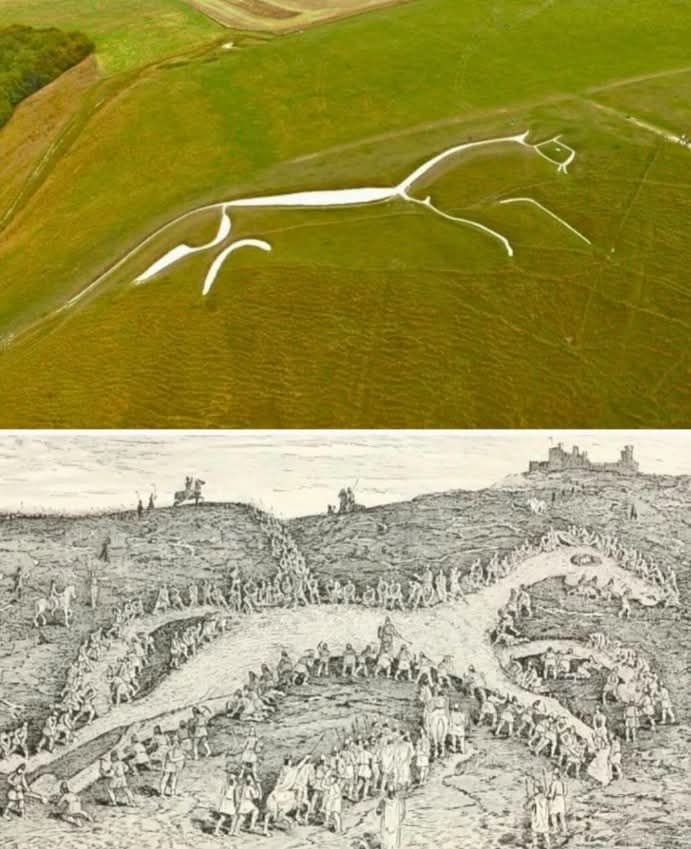
The White Horse of Uffington is a remarkable prehistoric hill figure in Oxford, dating back around 3,000 years... The Uffington White Horse is a prehistoric chalk figure carved into the hillside of southern England, dating to roughly 1000–700 BC. Stretching about 360ft (110m) long, the figure is not built up but cut into the turf, exposing bright white chalk beneath. Its stylized, almost abstract design sets it apart from later, more literal hill figures in Britain. Archaeological dating shows it has been maintained continuously for nearly 3,000 years. Without regular upkeep, known as “scouring,” where locals re-cut the chalk, the figure would quickly disappear under grass. Its exact purpose remains uncertain, though theories range from a territorial marker to a ceremonial or symbolic image tied to ancient beliefs. The horse’s form is so minimal and geometric that it’s best recognized from a distance or above, suggesting its creators were thinking on a landscape scale long before aerial views existed.

World History
Public . 13-Apr-2026Uffington White Horse
0
0
0
Reacts
0
View
23,816
Comment
0